
By Dan Kano
Fall Crappie Fishing
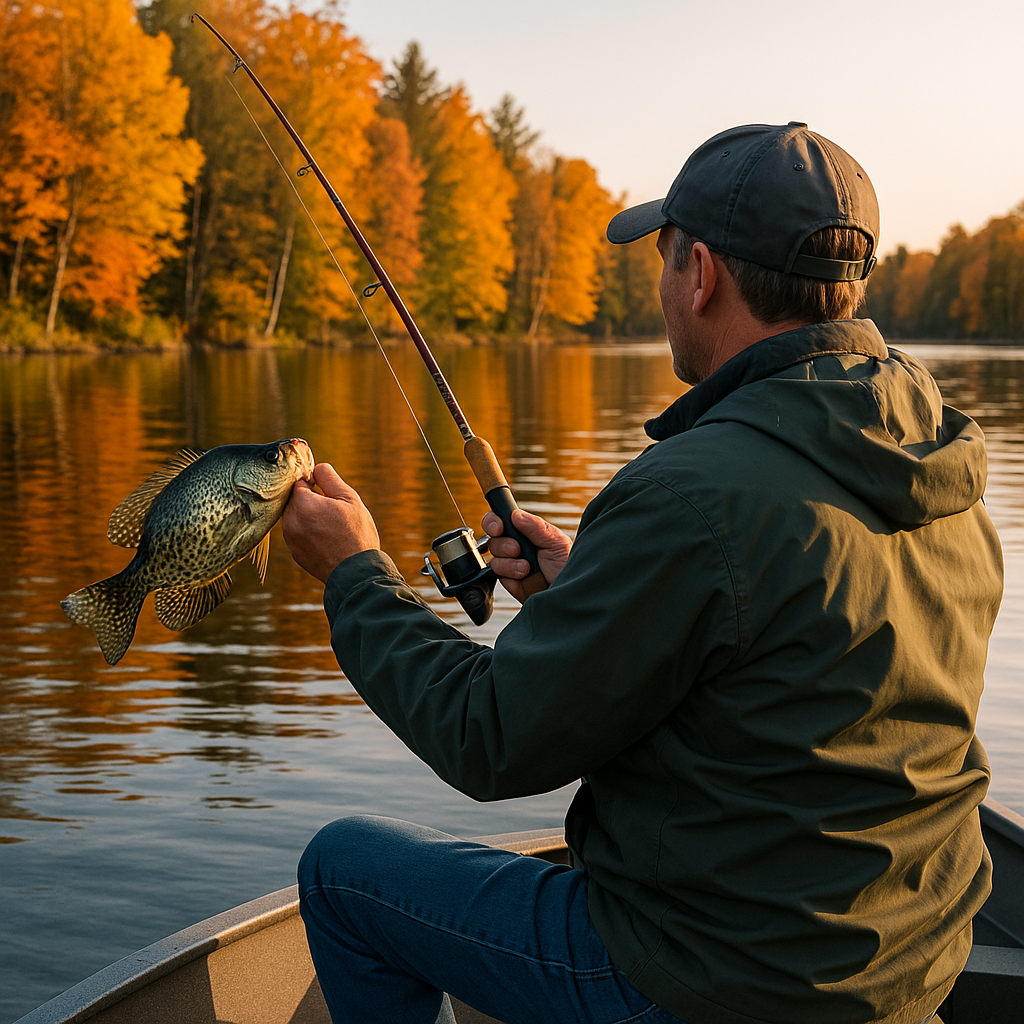
Bob’s Lake in Frontenac County is a hidden gem for fall crappie fishing. As water temperatures drop in autumn, crappie begin to school tightly and feed aggressively to prepare for winter. This behavior makes them easier to locate and more likely to bite, especially in the quieter post-summer fishing environment. With the right tactics, gear, and knowledge of local regulations, you can enjoy a productive and peaceful day on the water.
Where to Find Crappie in Fall
In early fall, crappie tend to suspend over deep structure-brush piles, rock ledges, and submerged timber in 15–25 feet of water. As the water cools into the 50–60°F range, they move toward:
- Creek mouths and inflows
- Sheltered coves and bays
- Weed edges and rocky points near drop-offs
Using a sonar unit helps locate schools and baitfish clouds, which crappie often follow closely.
Late Fall to Early Winter (November–December)
- Location: As water temperatures drop, crappie move deeper (20–40 ft) and begin to school tightly in basins, creek channels, and near drop-offs.
- Behavior: They become more sluggish but still feed, especially during low-light periods. Vertical jigging and sonar become essential tools.
Key Transition Patterns
- Crappie follow baitfish migrations, which also move deeper as temperatures fall.
- Oxygen levels in shallow water decrease, pushing crappie toward deeper, more stable zones.
- Structures like submerged trees, rock piles, and ledges become prime holding areas.
Top Tactics for Fall Crappie on Bobs Lake
1. Target Deeper Weed Clumps
Late fall crappie on Bobs Lake are often found around deeper weed clumps. These areas provide cover and attract baitfish, making them hotspots for larger crappie. Use a combination of floats and jigs to present your bait just above the weed tops.
2. Use Larger Baits for Bigger Slabs
Using larger baits in the fall can work well this time of year. These entice the bigger “black slabs” that are more active during this time
3. Stay Mobile and Use Electronics
Fall crappie are on the move, filtering from summer weed lines to deeper winter basins. Use sonar to locate schools and be ready to move frequently. Focus on moderately deep pockets (25–35 feet) with soft, muddy bottoms
4. Jig and Float Combos
A proven method on Bobs Lake is the jig-and-float combo. Use 1/16 oz jigs tipped with soft plastics or minnows. Adjust your float depth to keep the bait just above the fish. This setup is especially effective around brush piles and submerged timber.
5. Fish Transition Zones
Look for areas where weed lines meet deeper water. These transition zones act as staging areas for crappie moving toward wintering holes. Casting spinnerbaits or slow- trolling jigs through these zones can yield excellent results
Recommended Gear
- Rod/Reel: Light or ultralight spinning setup
- Line: 4–6 lb fluorocarbon or braid with a fluorocarbon leader
- Lures: Crappie Mo Glo jigs, Bobby Garland Slab Slay’Rs, live minnows
- Electronics: Basic sonar unit and lake contour maps
How to fish:
1. Vertical Jigging
- Drop small jigs directly into schools.
- Use a slow lift-drop cadence with frequent pauses.
- Ideal over submerged brush or rock piles.
2. Slip Bobber Rig
- Suspend bait at precise depths above structure.
- Adjust depth to stay just above the fish.
- Effective near weed edges and shallow cover.
3. Casting Micro Crankbaits
- Use 1/16 to 1/8 oz crankbaits or spinners.
- Retrieve slowly with occasional pauses.
- Best on warmer afternoons when crappie are more active.
Recommended Gear Setup:
Rod & Reel
- Rod: 6'–7' light or ultralight spinning rod with a fast tip.
- Reel: 1000–2000 size spinning reel with smooth drag.
- Line: 4–6 lb Superline or braid attached to a 2-4’’ft 4-6 lb fluorocarbon leader
Terminal Tackle
- Jigs: 1/32 to 1/8 oz marabou or soft plastics in white, chartreuse, and pumpkinseed.
- Hooks: #6 to #8 Aberdeen hooks
- Bobbers: Slip bobbers with adjustable stops.
Electronics
- Fish finder with down imaging and GPS mapping. Side imaging and forward- facing sonar is a bonus
- Apps like Navionics or Lakemaster charts
Best Baits for Fall Crappie:
- Small Rapala Jigging Rap: 1.25” (W2)- 1.5” (W3)
- Soft Plastics: Grubs, tubes, and paddle tails. Example: Northland Pan Candy series
- Marabou Jigs: Excellent for subtle, lifelike movement.
Ontario Zone 18 Fishing Regulations (2025)
Bob’s Lake falls within Fisheries Management Zone 18, and anglers must follow these regulations:
- Crappie Season: Open all year.
- Limits:
- Sport Licence: 30 crappie per day.
- Conservation Licence: 10 crappie per day
- Bait Restrictions:
- Zone 18 is part of the Southern Bait Management Zone (BMZ).
- Live or dead baitfish or leeches may not be transported into or out of the BMZ.
- Preserved baitfish and leeches are permitted
Always carry a valid Ontario fishing licence and check for any local exceptions or fish sanctuaries before heading out.
Final Tips
- Fish during low-light periods-early morning and late afternoon.
- Stay mobile and adjust depth frequently.
- Respect local regulations and practice selective harvest to preserve the fishery.
Fall crappie fishing on Bob’s Lake offers a rewarding blend of challenge, tranquility, and natural beauty. With the right gear and knowledge, you’re set for a successful outing.