

Theft
-
Don't leave any firearms or weapons of any kind behind.
-
If you are leaving a vehicle, make sure it has been winterized, secured and disabled. (e.g., for a snowmobile, remove the track and hide the keys).
-
If you can't store your boat off the property, cover it and lock up the engine.
-
Don't leave anything on a trailer unless it is locked or disabled so someone can't simply drive it away.
-
Make sure there is nothing left behind in your shed that someone might want to steal, such as cans of gasoline.
-
If there is someone close by who is staying year-round, have them check your place whenever they can. Knowing that something has happened sooner is always better than an extended delay.
-
If you have an alarm system at your cottage, make sure the alarm company has your current phone number.
-
Make sure your windows and doors are securely closed. The consensus leans towards closing curtains so intruders cannot see inside the building.
-
If you are leaving anything that might be of value, such as sporting equipment, fishing rods, etc., record the serial numbers. Use an engraving pen to mark them with a number that can be easily traced back to you.
-
Make a list of everything you are leaving. Take a picture of everything.
-
Keep the GBCLA phone card in a handy location with the OPP Non-Emergency Response number.
Carbon monoxide poisoning:
Carbon monoxide is a by-product of incomplete burning fuels such as wood, propane, oil, natural gas, kerosene, gasoline, diesel fuel, coal or charcoal. It is a “silent killer” that shows itself when using appliances that are poorly maintained, damaged, blocked, poorly venting or have inadequate air flow. You can’t see or smell carbon monoxide but it can be deadly if it accumulates inside your cottage, home or workshop. What can you do?
- Maintain your furnace, fireplace, and other fuel burning appliance, especially at the start of the season.
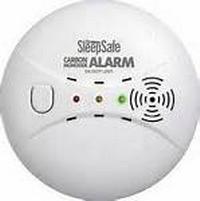
- Install a Carbon monoxide (CO) Alarm: These alarms will warn you of rising levels of CO and allow you and your family time to escape. For persons with CO Alarms please note that you should replace your alarm every 7 years.
- Know the Symptoms of CO Poisoning. The symptoms are similar to the flu – nausea, headache, burning eyes, confusion and drowsiness – except there is no fever.
For more information on Carbon monoxide exposure prevention, visit www.COSafety.ca
Radon Gas
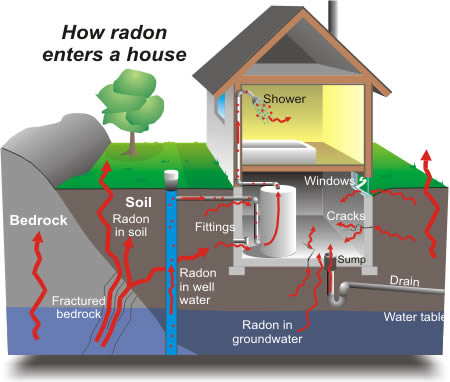
Radon is a colourless, odourless, radioactive gas that occurs naturally in the environment. Long-term exposure to this gas can cause lung cancer in both smokers and non-smokers. Radon comes from the natural breakdown of uranium in soils and rocks. When radon is released from the ground into the outdoor air, it is not a safety concern. However, radon can enter inside a building through cracks in the foundations, gaps around pipes, and other openings underneath a cottage.
Testing your cottage for radon can be done either with an inexpensive “do it yourself” detector or using a trained technician. A minimum 3-month test period is generally recommended. The closest radon contractor in the Bobs/Crow lake area is Mr. Radon in Kingston.
Treating a cottage above the current Health Canada guideline of 200 Bq/cubic meter typically involves some form of mechanical ventilation in the basement and venting to the outside. There have been reported instances of some cottages on Bobs lake that exceed the minimum guideline.
Fire Safety Tips for your Cottage
Fire Safety is the most important topic for personal and property risk at the cottage. There are no reasonable arguments for not doing the most basic prevention measures that can save lives and mitigate tens of thousands of dollars in potential damage.
Smoke Alarms:
Ontario Law states that you must have at least one working smoke alarm on each floor of a cottage and located near sleeping areas. With the slower response time for fire-fighting services in cottage country, the advance warning provided by smoke alarms is literally a matter of life and death.
Carbon Monoxide (CO) Detectors:
Ontario law requires a CO detector in all homes that have appliances that generate CO. A CO detector is essential given the number of sources of carbon monoxide inside the cottage
from furnaces, stoves, fireplaces, heaters and barbeques.
Fire Extinguishers:
Although not required by law, portable fire extinguishers are a crucial first defense to controlling a fire. There are 3 primary categories of fires that the powder in the fire
extinguishers are designed to extinguish. Class A are for combustibles such as paper and wood. Class B are for flammable liquids and Class C are for electrical fires. Choose a fire extinguisher which is rated for all 3 classes. Typical sizes for the home range from a 1A, 5B, C for a 2 lb. model up to 2A, 10B, C for about a 7 lb. model. The best place to locate one is near the kitchen or at the entrance to the cottage.
Chimney Fires:
With more and more cottages being used in colder months, the risk of a chimney fire increases. A chimney fire starts when super-heated gases from your wood stove or fireplace
ignite the creosote which builds up on the inside walls of the chimney. Creosote is a byproduct deposit from burning wood. Burning only hardwoods, hot fires, and regular
chimney and stove inspection/cleaning by a WETT (Wood Energy Technology Training) certified technician, are the key actions.
Storing Flammable Materials:
Flammable materials such as gas, kerosene, propane tanks, oils, lighter fluid, paint thinner, etc., should always be stored away from the cottage or any attached garages or storage rooms. This rule also applies to storing lumber underneath a cottage.

Safety Kits
An off-the-shelf kit will have most of the necessities, but to create a cottage ready kit, think about the hazards you’re more likely to find in cottage country (bugs, wildlife, pollen and other asthma triggers, the sun, poorly fitting hiking boots), and the potential difficulties of being in a remote location without easily accessible clean water and electricity. So, key items include antibiotic creams, antihistamines, moleskin for blisters, saline solution or sterile water, and ice packs that don’t need freezing. (If you leave these things in the cottage over winter, check with the manufacturers to be sure they’re okay to use after they’ve frozen and thawed.) The Canadian Red Cross, suggests adding a splint, since “it’s handy for injuries when help is farther away.” Similarly, a butterfly bandage— meant to keep the edges of a wound together so it doesn’t gape—is useful for a cut that can’t be stitched until you get to the ER.
As well, other must-haves include gauze, triangular bandages, and nitrile gloves, made out of hypoallergenic synthetic rubber. For the times when a first-aid kit just won’t cut it is recommended you keep emergency contact numbers and info beside the phone or on the fridge. Another tip: Along with written directions to the cottage, keep a prepared list of questions to ask the injured, who may be guests or neighbours you don’t know well. Do they have allergies? Do they take medications? Do they have a history of medical problems? Getting as much information right away will really help the advanced care people when they step in. For Urgent Care Emergencies phone 911. Another option is to contact Telehealth: 1-800- 797-0000. For further information take a look at www.ontario.ca/healthcareoptions.
Black Bears(Ministry of Natural Resources & Forestry):
In recent years, many sightings of bears were reported around Bobs and Crow Lakes. Although black bears are not normally dangerous animals, they are, however, opportunistic omnivores. In other words they will eat practically anything that is easy to get at. Admire them, respect them.
What we should know about black bears:
- Black bears are large powerful animals. Adult males can weigh between 120 to 280 kg. Adult females can weigh between 145 to 280 kg.
- Black bears are actively feeding from mid April to late fall in most parts of the province.
- Black bears feed mainly on summer berry crops such as raspberries and blueberries, as well as mountain ash acorns and beech nuts in the fall.
- In late summer and early fall some bears actively feed for 20 hours per day, ingesting as much as 20,000 calories.
- During the summer/fall bears typically double their body weight while preparing for winter hibernation.
- If natural foods are not available , black bears will travel up to 100 km to find other food-primarily your garbage.
- Once they know where to find a non natural food source they will return again and again.
- In central Ontario bears usually enter their dens by mid November.
To report bear problems: Contact the Bear Reporting Line at 1 866 514 2327. For further info see: www.bears.mnrf.gov.on.ca